Exploring Rare Metals:
Their Discovery, Applications, and Global Rarity
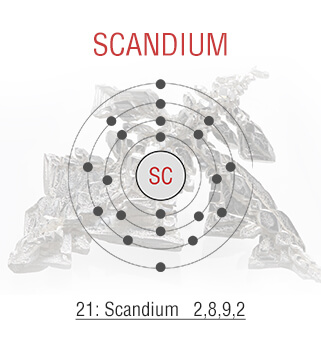
Named after Scandia (Scandinavia), where it was first discovered. Scandium is used to create lightweight aluminium alloys for aerospace components and to improve the efficiency of mercury-vapor lamps.
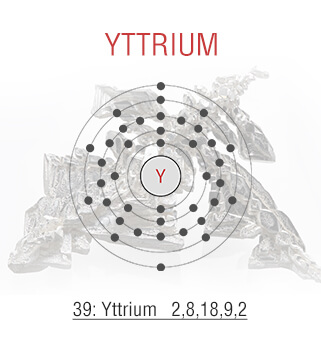
Named after Ytterby, Sweden, the birthplace of many rare earth discoveries. Yttrium is used in YAG lasers, red phosphors for TVs, high-temperature superconductors, and microwave filters.
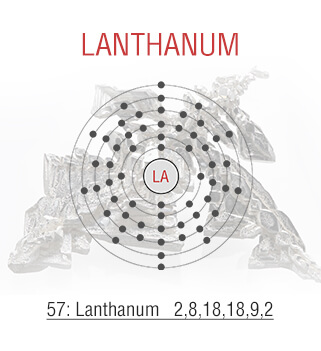
Derived from the Greek word “lanthanein” meaning “hidden.” Lanthanum is used in camera lenses, high-quality glass, hybrid batteries, and as a catalyst in oil refining.
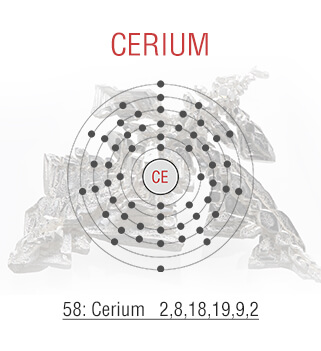
Named after Ceres, the Roman goddess of agriculture. Cerium is used in glass polishing, catalytic converters, self-cleaning ovens, and in lighter flints for ignition.
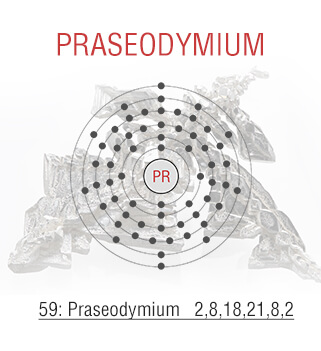
Originates from the Greek “prasios didymos” meaning “green twin.” Praseodymium is used in magnets, lasers, welding goggles, and as a colorant in glass and enamel.
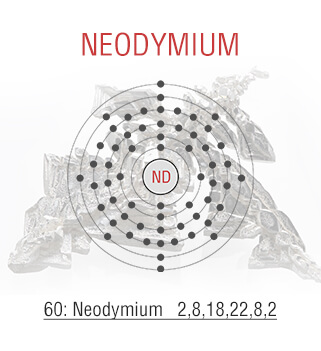
Comes from the Greek “neos didymos” meaning “new twin.” Neodymium is widely used in powerful magnets, precision lasers, violet glass coloring, and electronic components.
Named after Prometheus, the Titan who brought fire to mankind. Promethium is mainly used in nuclear batteries and power generation applications.
Named after Vasili Samarsky-Bykhovets, discoverer of the ore samarskite. Samarium is used in high-strength magnets, lasers, and neutron capture materials.
Named after the continent Europe. Europium is widely used in red and blue phosphors, lasers, and as an agent in mercury-vapor lamps and NMR technology.
Named in honor of Johan Gadolin (1760–1852) for his work on rare earths. Gadolinium is used in MRI contrast agents, X-ray tubes, lasers, and magnetic materials.
Named after Ytterby, Sweden, where it was first found. Terbium is used in green phosphors, lasers, and energy-efficient fluorescent lamps.
Derived from the Greek word “dysprositos”, meaning “hard to get.” Dysprosium is used in rare-earth magnets, advanced lasers, and high-performance alloys.
Named after Holmia (Stockholm), the native city of one of its discoverers. Holmium is primarily used in lasers and high-precision optical equipment.
Named after Ytterby, Sweden, known for its rare earth discoveries. Erbium is used in lasers and as an additive to strengthen vanadium steel.
Named after the mythical northern land Thule. Thulium is used in portable X-ray machines and specialized laser devices.
Named after Ytterby, Sweden, the birthplace of several rare elements. Ytterbium is used in infrared lasers and as a chemical reducing agent in industrial processes.
Named after Lutetia, the ancient name of Paris. Lutetium is used in PET scan detectors and in manufacturing high-refractive-index glass.
Derived from the ancient Sanskrit word “Vaidurya”, linked to the city of Belur. Beryllium is used to strengthen alloys and is vital in aerospace, satellites, and high-speed aircraft due to its strength, lightness, and thermal stability.
Predicted by Dmitri Mendeleev and later discovered by Paul Emile Lecoq de
Boisbaudran in 1875, Gallium is used in microelectronics, microwave circuits, infrared
devices, LEDs, and diode lasers.
Rarity: 19,000 ppb
Discovered in 1844 by Karl Ernst Claus, Ruthenium was named after Ruthenia
(ancient Russia). It is used in wear-resistant electrical contacts, thick-film
resistors, and platinum alloys.
Rarity: 1 ppb
Discovered in 1803 by William Hyde Wollaston, Rhodium takes its name from
the Greek word for “rose.” It is used in catalytic converters, glass manufacturing, and
nuclear reactor detectors.
Rarity: 1 ppb
Discovered in 1803 by William Hyde Wollaston and named after the asteroid
Pallas, Palladium is used in catalytic converters, electronics, dentistry, medicine, and
hydrogen purification.
Rarity: 15 ppb
Known since ancient times, Silver’s symbol Ag comes from the Latin argentum,
meaning “white” or “shining.” It is used in jewelry, coins, electronics, mirrors, and
chemical catalysts.
Rarity: 75 ppb
Discovered in 1863 by Ferdinand Reich and Hieronymous Richter, Indium was
named after the indigo line in its spectrum. It is used in LCD screens, semiconductors,
and aircraft engine coatings.
Rarity: 250 ppb
Discovered in 1782 by Franz-Joseph Müller von Reichenstein and named after
tellus (Latin for “earth”), Tellurium is used in alloys to improve machinability,
strength, and corrosion resistance.
Rarity: 1 ppb
Discovered in 1925 and named after the Rhine River, Rhenium is used in jet
engine superalloys and platinum-rhenium catalysts for producing high-octane
gasoline.
Rarity: 0.7 ppb
Discovered in 1803 by Smithson Tennant and William Hyde Wollaston, Osmium is
named after the Greek osme (“smell”). It is used in fountain pen tips, electrical
contacts, and hard alloys.
Rarity: 1.5 ppb
Discovered in 1803 by Smithson Tennant and named after the goddess Iris,
Iridium is used in spark plugs, crystal-growing crucibles, and as a catalyst in chemical
industries.
Rarity: 1 ppb
Known since ancient times and found in Egyptian tombs, Mercury is used in
thermometers, lamps, and electronic devices, as well as in the production of industrial
chemicals.
Rarity: 85 ppb
Known since antiquity and possibly named from the Arabic bi ismid or German
wismuth (“white mass”), Bismuth is used in pharmaceuticals, pigments, solders, and
cosmetics.
Rarity: 8.5 ppb